


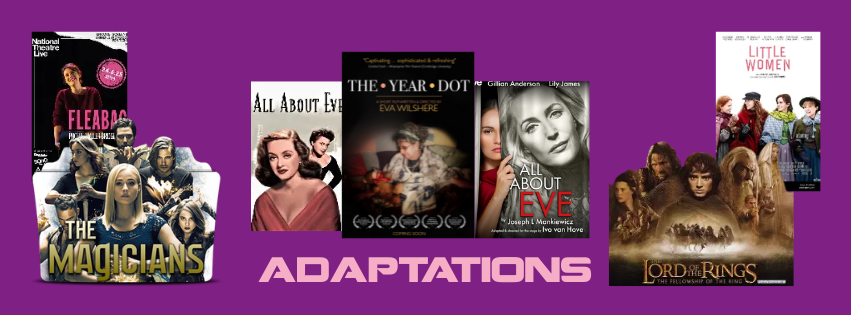
There’s something quietly thrilling about a good adaptation — when a story we thought we knew is handed over to a new medium and somehow becomes even more itself. Whether it’s a dense novel stretched out over multiple seasons, a short film finding its voice on stage, or a classic film reimagined with actors standing feet away from us, some stories really do thrive in translation.
And others… don’t. (But I’ll be kind and not name names.)
I’ve been thinking a lot about what makes certain adaptations work, and why some feel unnecessary or flat. So here’s a breakdown — with examples — and a deeper look at two projects in particular: The Magicians and All About Eve, to explain what guided my adaptation for The Year Dot from a short film into a play.
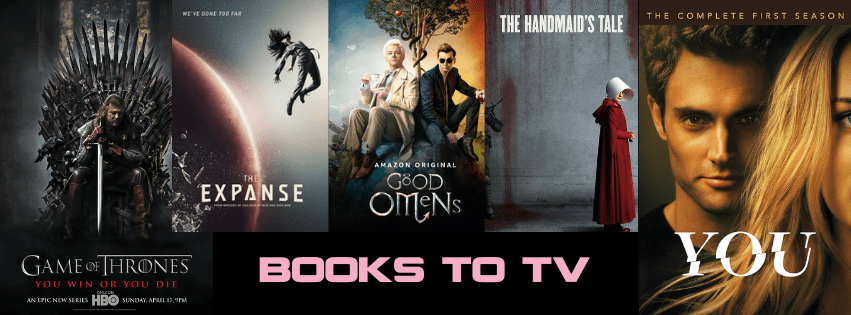
Books to TV: Room to Breathe, Space to Evolve
Some of the strongest adaptations from page to screen have come through television — probably because TV offers time. It lets stories unfold slowly, characters change messily, and worlds feel properly lived-in.
A few favourites:
Game of Thrones (Seasons 1–4) 2011 – 2014)
Still an absolute masterclass in adaptation — rich, sprawling, political, and unapologetically brutal. The first four seasons closely follow Martin’s books and benefit massively from that discipline, as we all know what a down-turn the story took in later seasons!
The Expanse (2015 – 2022)
(Confession: I’ve not gotten round to watching this one yet, but I’ve been told it’s…) Intelligent and character-driven sci-fi The Expanse does a phenomenal job of balancing space opera with real-world stakes.
Good Omens (2019 – present)
Camp, clever, and weird in all the right ways. The show benefits from the author’s direct involvement (although like some other authors, do not necessarily deserve to be named!) I love Good Omens, and much like Buffy (and unfortunately many other creative works) I try to think of the product over the creator.
The Handmaid’s Tale (2017 – present)
Season 1 is a near-perfect translation of Atwood’s novel: eerie, visual, and quietly furious. Later seasons take bigger swings, not all of them landing, but the core atmosphere holds strong. (Or so I’ve been told! I had to take a break in Season 2 as I was getting too depressed. I promise to jump back in at some point soon.)
You (2018 – present)
Honestly? It shouldn’t work as well as it does. But the internal monologue from the book becomes a darkly entertaining voiceover on screen, and it leans into its own ridiculousness just enough. Although I stopped watching after the season 3 finale.
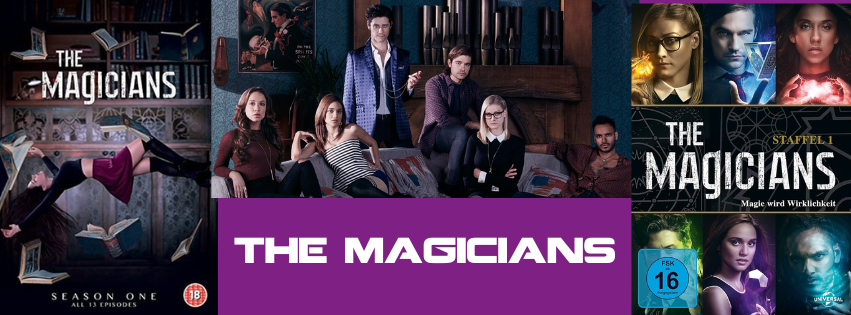
The Magicians: More Inclusive, More Alive
Now, I’ve posted before about The Magicians (2015) when discussing the pilot episode, but it deserves another mention here because it’s such an interesting example of a TV show that takes the bones of a novel and reanimates them into something even better.
The book’s magical world is intriguing, but it’s also soaked in a very particular kind of elitism — emotionally distant, male, and fairly bleak. All told to us through the eyes and mind of the protagonist Quentin. The series keeps the world-building, but ditches the narrow lens. It becomes more inclusive, more emotionally rich, and way more relatable (to literally anyone who isn’t a disaffected white male literature grad).
There’s a great example in how the show handles the entire ‘Upstate’ chapter from the book. That long, introspective sequence is distilled into one wordless look between Alice and Quentin after a threesome — a moment that says everything it needs to. That’s what a good adaptation does: it trusts the medium to tell the story differently, by adding varied points of view, or thoughts unmentioned, or spoken through a physical action.
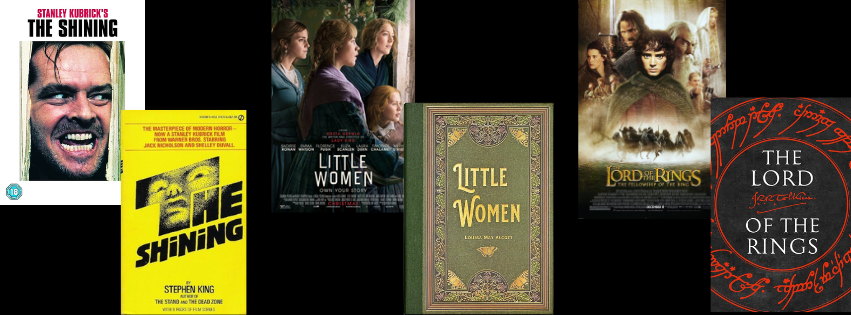
Books to Film: Distilling the Essence
Film adaptations don’t have the luxury of time, so the best ones either hone in on the emotional heart of the book or use the visual medium to say what the page can’t.
A few that stick with me:
The Shining (1980)
Sure, it deviates wildly from King’s original — but Kubrick’s version is chilling and unforgettable in its own right. Less haunted house, more existential dread. Plus, Jack Nicholson is brilliant in it.
Little Women (2019)
Greta Gerwig’s adaptation is smart and meta without ever being smug. The non-linear structure actually makes the story feel more emotionally immediate, somehow.
The Lord of the Rings (2001-2003)
One of the rare big-budget trilogies that feels handcrafted. It trims where it has to, but keeps the soul of Tolkien’s work intact.

Film/TV to Stage: Minimal Space, Maximum Impact.
Stage adaptations from screen are trickier. There’s a temptation to just re-perform the film in front of a live audience, which rarely works. The best ones understand that theatre needs intimacy, restriction, and presence.
Unfortunately I can’t visit the theatre as much as I’d like to and have yet to see any of these live, but wanted to offer some examples I found online:
Brief Encounter (Kneehigh Theatre, Coward, 2008)
This one’s bold and stylised, with actors stepping in and out of the screen. It doesn’t try to replicate the film — it transforms it into something stranger and more playful.
The Shawshank Redemption (UK Tour, King, 2025)
Faithful and emotionally grounded. It takes what worked on screen — the tension, the friendship, the glimmer of hope — and makes it feel immediate.
The Twilight Zone (Almeida Theatre, Serling, 2017)
Anthology-style staging with a noir aesthetic. It’s clever, eerie, and completely in love with its own genre roots — in a good way.
Fleabag (London’s West End, Waller-Bridge, 2019)
Yes, it started on stage. Yes, it became an iconic TV show. But the live monologue version still punches you in the gut in a way that only theatre can.
All About Eve? More Like All About Gillian Anderson.
The 1950 film of All About Eve is all about the dialogue and the diva — Bette Davis practically purrs her way through Margo Channing’s existential crisis, and every raised eyebrow is cinema gold. The film has that old-Hollywood glamour, all cigarette smoke and catty one-liners, with the camera zooming in at just the right moment to catch the sting.
Fast-forward to 2019 at the Noël Coward Theatre, and Gillian Anderson steps into Margo’s heels with a performance that’s razor-sharp and a little unsettling — like a martini that’s just one olive too strong. The staging piles on the multimedia tricks: live cameras, projections, even a time-lapse of Margo’s face ageing before our eyes. Critics loved some of this, but also pointed out that when the tech keeps shouting for attention, you start missing the simple pleasure of a well-timed cutting remark.
Still, Anderson’s Margo doesn’t need smoke, mirrors, or a video wall. She gives us a woman on the edge — vulnerable but still crackling with bite. The difference between film and stage here is clear: in 1950, the glamour and close-ups did the work. In 2019, it’s Gillian Anderson, in the flesh, holding the audience captive — and frankly, who needs gimmicks when you’ve got her?

And That Brings Me to The Year Dot
Adapting my short film The Year Dot (2022) into a stage play feels less like a new idea and more like something inevitable — like it was always meant to live in a theatre.
Everything about it leans into what theatre does well: the entire story takes place in Dot’s flat. The conflict is internal, emotional, character-driven. It’s about absence, loneliness, and memory. Inner drama can easily become a dramatic performance.
One of the biggest challenges has been letting go of the original COVID context. When I wrote it, the world outside was locked down. Now to make it more enduring, I’m rewriting it without the specifics of the pandemic. That’s scary — but necessary. Because the truth of the piece isn’t about any one time in history, it’s about how we treat our elderly and what happens when they are forgotten. It’s about isolation and how we make sense of the world when we’re cut off from it and the ones we love.
The real trick is keeping Dot’s separation from her family believable — without painting them as villains. They can’t just abandon her for a year so I’m trying to build a version of events that feels emotionally honest but still… gentle. The audience has to feel for Dot without despising everyone else.
It’s a puzzle, but a good one.


