

When I first started researching archetypes for The Script Department podcast Typecast, I was drawn to the Anti-Hero—a character who’s not quite a villain, not quite a hero, but somehow manages to steal the show. As promised, here’s a deeper dive into why we learn to love these morally ambiguous misfits.

What Makes a Hero? (And What Makes an Anti-Hero?)
Before we get into the nitty-gritty of Anti-Heroes, let’s establish what defines a traditional hero. Typically, they:
- Are responsible for completing the quest.
- Serve as the main lens through which we experience the story.
- Undergo the greatest psychological transformation.
- Are willing to sacrifice for a cause.
But what happens when the person taking on the quest is… Well, a bit of a disaster? Enter the Anti-Hero—a character who has no business being a hero but somehow ends up on a path of reluctant transformation. Often tricksters, they might start off solely focused on their own survival, only to find themselves inexplicably drawn into something bigger.
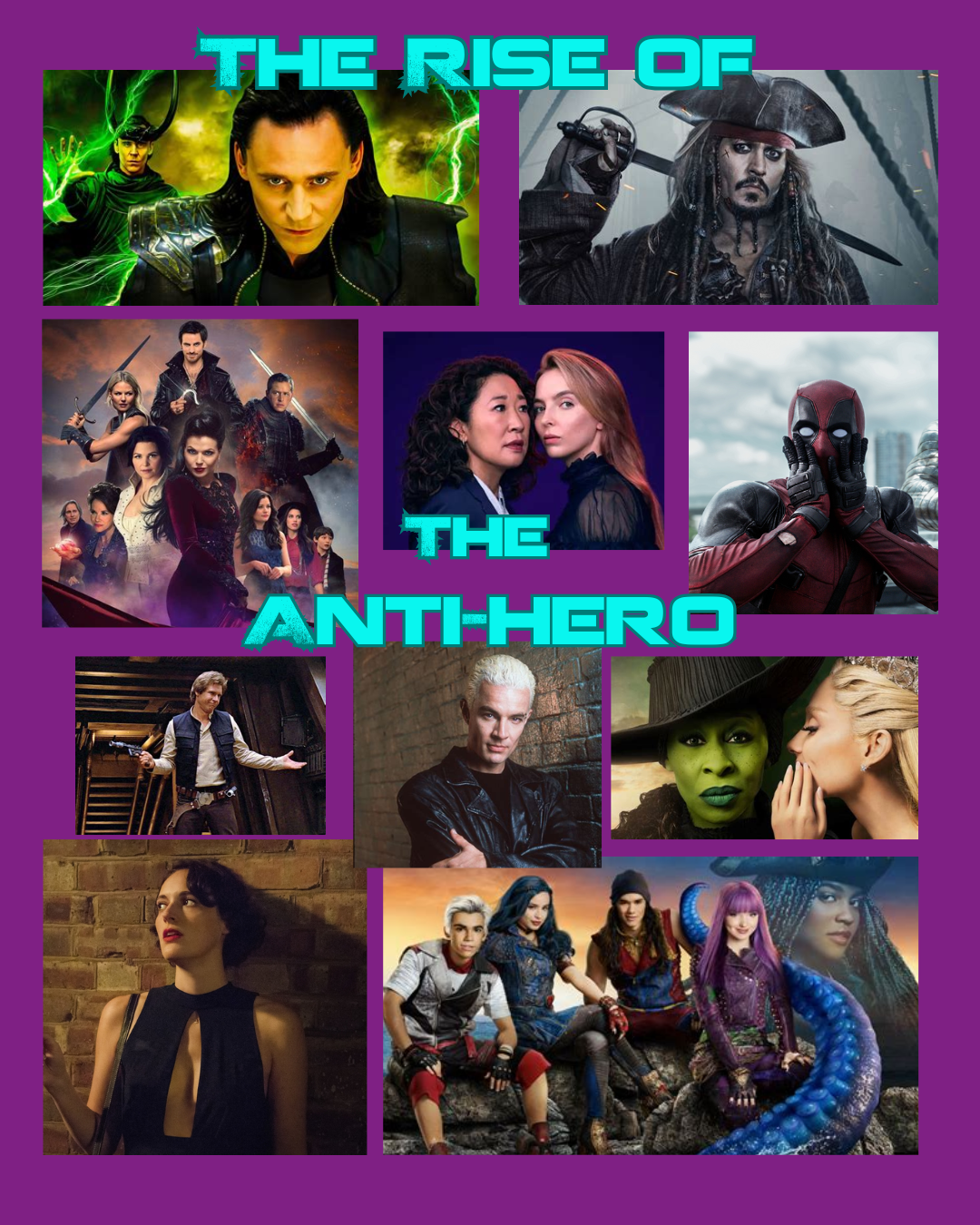
Take Loki from the Marvel Universe, for instance. Initially a conniving, self-serving villain, he evolves into a complex antihero in his own Disney+ series, using wit, charm, and a knack for survival to navigate his ever-changing fate. Similarly, Deadpool thrives in the morally grey, cracking jokes as he takes down enemies with questionable methods. Or consider Han Solo from Star Wars (1977) a smuggler who starts off looking out for himself but ultimately becomes a key player in the Rebellion. Or Spike from Buffy The Vampire Slayer (1997-2003), a vampire who wants to kill Buffy and ends up wanting to date her! The audience can’t help but root for these characters, even as they bend the rules, cheat the system, and charm their way out of trouble.
The Un-Hero: Right Place, Wrong Person
Then, there’s the Un-Hero—a character who seems to stumble into heroism by accident. Misfits who appear at the worst possible moment, they tend to cause more harm than good, yet somehow everything miraculously works out in their favour. Think of Jack Sparrow in Pirates of the Caribbean (2003–2017)—more drunk trickster than noble warrior, yet he always manages to come out on top. Or Arthur Dent in The Hitchhiker’s Guide to the Galaxy (2005), a bewildered everyman who fumbles his way through intergalactic chaos but still ends up saving the day. Even Peter Griffin from Family Guy (1999–present) occasionally stumbles into heroic moments, albeit unintentionally and usually by making things worse first.
Why Do We Relate to Villains? (And Should We?)
During my research, I watched a video discussing why some viewers relate more to villains than to heroes (Link here). It made me question the psychology behind this: I’ve always found myself identifying with the quirky android, the free-spirited dancer, or the unexpectedly strong blonde heroine, while others feel drawn to the dark, brooding villain. Why is that?
While I appreciate stories that embrace flawed characters as a reflection of real life, it’s unsettling to think that some truly malevolent figures could seep into cultural norms. There’s a big difference between a mischievous Disney villain like Ursula and a horror film antagonist like Hannibal Lecter—one is a theatrical trickster, the other a deeply disturbing murderer.
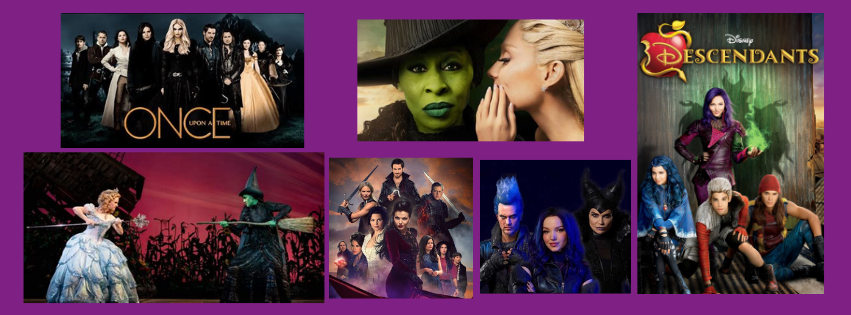
That being said, I love stories that explore a character’s motivations. The best shows feature morally ambiguous figures with understandable backstories—characters who make us question where the line between good and evil truly lies. Once Upon a Time (2011–2018) excelled at this, reframing fairy-tale villains like the Evil Queen and Rumpelstiltskin as layered, tragic figures. The key difference between the villains (Disney or otherwise) and the Anti-Heroes, is that the Anti-Hero must still inherently fight for good. The Descendants (2015–2019) film series, reimagined infamous Disney villains as misunderstood teens in a fun-filled, musical spectacular and these characters were anti-heroes because deep down they all wanted to be good. The West End version of Wicked (2003) transformed the Wicked Witch of the West into a misunderstood rebel long before antiheroes became the trend.
Anti-Heroes: Outcasts We Can’t Ignore
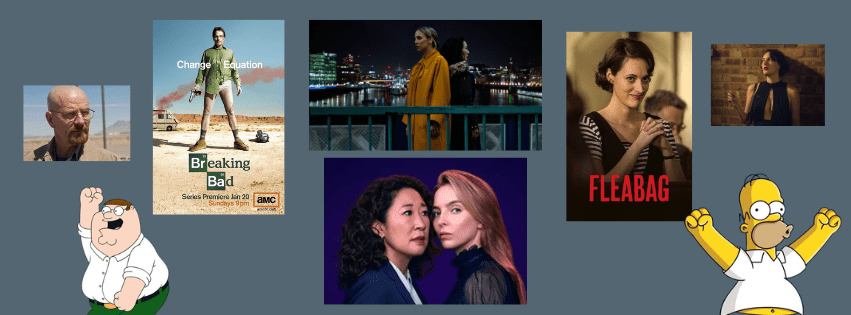
Anti-Heroes represent the outcasts and misfits we see in ourselves. Until recently, women were rarely depicted on television and film as antiheroes or un-heroes. A great example of exploring the female antihero is Killing Eve (2018–2022), a series with two protagonists who blur the lines between hero and villain. Villanelle, a stylish, charismatic assassin, serves as Eve’s antagonist, lover, and occasional mentor. She is undoubtedly a villain, but does her vulnerability and complexity make her an antihero? If you’ve never been taught how to be a good person, how would you know how to become one?
This question is central to many of our favourite antiheroes. Take Walter White from Breaking Bad (2008–2013)—a mild-mannered teacher who, when faced with desperation, transforms into a ruthless criminal. His motivations are understandable, even if his actions are unforgivable.
Killing Eve challenges us to root for someone who is, by all moral standards, irredeemable—yet we do. Just like these other Anti-Heroes, Villanelle’s wit, charm, and complex backstory make her impossible to look away from, proving that a compelling antihero is often more captivating than a flawless hero.
Why We Love Them
Anti-Heroes say the things we sometimes wish we could say, do the things we secretly wish we could do, and somehow remain likeable despite their questionable ethics. Phoebe Waller-Bridge has mastered this, with Fleabag (2016-2019) standing as one of the best examples of an antihero in recent years. She’s selfish, impulsive, and deeply flawed—but we care about her anyway. And if we can forgive her, then we can forgive the people in our lives that we love when they mess up.
At the end of the day, Anti-Heroes remind us that perfection is overrated. And let’s be honest—watching a character make a mess of things and still come out on top is way more fun than watching someone do everything right.


One response to “The Rise of the Anti-Hero”